When we talk about overthinking, I think a lot of times we picture the obvious version of it: “Oh, I was so awkward when I said that.”
And yes, baby. But also, I think overthinking exists in an entire ecosystem of preparing and planning and thinking and responding and managing.
It can look like trying to maximize efficiency all the time. What’s the best way to do this? What’s the right way to do this? What order should everything happen in? It can look like being caught between what feels right to you and what is expected of you. It can look like worrying that doesn’t even necessarily feel like worrying because it sounds more like, “Okay, I’m going to need to do this, and then this, and then this. But what if this happens? Okay, then I need to do this because I don’t want to be late.”
It’s overconsidering everything and everyone. All of the different overlaps of people and responsibilities, the mental checklist, the to-dos, checking those to-dos, anticipating what could happen next.
So yes, overthinking can be replaying something you said and wondering if you were awkward. But I think it can be much bigger than that. And because so much of it can look like being prepared, thoughtful, responsible, or really good at managing your life, it can be hard to recognize when all of that thinking has stopped being helpful.
Thinking feels safer because it’s not a commitment yet
When I think about why we overthink something for the fiftieth time, I think sometimes we are trying to make sense of something or make it work when we don’t actually have all the information. Other times, we may be avoiding how we feel about it, our relationship to it, or the fact that eventually we might have to do something.
Thinking feels safer because it’s not a commitment yet.
When we’re thinking, we can convince ourselves we have control. In our thinking landscape, we have all the variables considered. We can imagine how something will play out. If it doesn’t play out correctly, we can imagine how we would intervene and fix it.
It’s still ours.
Once we actually have to decide or put something into action, we open ourselves up to failure, criticism, or simply not doing it right. A lot of the control goes out the window because now the thing exists in the real world, where outside influences can show up at any minute.
I also think thinking and thinking and thinking can give us a false sense of understanding when we haven’t even put something into motion yet to see whether it actually exists outside of our minds in the way we thought it would.
That’s part of what can make overthinking so compelling. It feels like we’re making progress because, in our minds, we are.
Problem-solving requires action. Rumination can keep us stuck.
There is a difference between thinking through a problem and ruminating on one.
Problem-solving requires trial and error sometimes, and I think all of the time it eventually requires action. At some point, we have to action the problem-solving. We have to try something, have the conversation, make the decision, or gather the information that actually exists outside of our own heads.
Rumination tends to be more obsessive. It keeps us stuck, but again, it can feel like we’re making progress because there is so much happening internally.
This can show up around career goals too. You keep buying another course. You keep taking another class. You keep waiting until you have a little more experience because there is always one more thing to put in place before you feel ready. The thinking underneath it can sound like, “I’m not there yet, so what do I need to put in place? What’s the structure? What’s the correct order for me to get there?”
And sometimes, yes, you genuinely do need more information. Sometimes another class is useful. But I think there is a really fine line where we have to be honest with ourselves: would more information actually change my process? Would it really matter? Or is waiting for more information an excuse to not try, move into action, or check in with how I actually feel?
On a smaller scale, this happens in conflict all the time. We replay the conversation over and over. What could I have said differently? How could I have been a better friend? What did I do wrong? What did they do wrong? What should they have done differently? Why am I so upset with them?
Meanwhile, we haven’t paused long enough to think, “Wait. Actually, I’m hurt. I feel disconnected. I don’t feel listened to.”
Sometimes it’s easier to think through all of the logic of an interaction than it is to tune into the fact that your feelings are hurt and you’re confused.
Perfectionism has a lot to do with this
What does perfectionism have to do with overthinking?
Everything, I think.
A lot of times perfectionism is what kickstarts the whole thing: “I didn’t handle this right,” or, “This didn’t go well, so I need to think through why and come up with a solution for what I’ll do if this ever happens again.”
The problem is that there are so many variables that can skew a perfect plan. Honestly, there are more variables that can skew a perfect plan than can play into a perfect plan.
Rumination gives us this false sense of perfection. I can think through the perfect scenario. Then I can think through as many things as possible that could interfere with that scenario, figure out how I would fix every one of them, and convince myself that when it happens in real life I’ll be prepared.
But real life is still going to be real life.
And I think this overlaps with something else I see all the time: people confusing self-awareness with self-criticism.
You might not be extremely self-aware. You might be extremely self-critical.
Okay, here is where I get on my soapbox a little bit.
I think a lot of people believe they are self-aware when they are actually self-critical.
To me, self-awareness requires some acceptance and surrender to the fact that we are human beings. We’re going to make mistakes. We’re living as we can. Being self-critical tends to look much more like rumination and hyperfixation on the gap: where I wasn’t enough, where I didn’t do it right, where I’m anxious about whether I’ll be able to do it correctly next time.
That’s where our inner critic can masquerade as helpful.
It says, “You can’t trust yourself, so you need to think about it more. You need to overprepare. You need to be extra ready.”
Replaying conversations can work the same way. A lot of times I think we are unconsciously trying to learn a lesson or almost self-grade the interaction. We add meaning to things where there isn’t always meaning, and when we instinctively do that to try to make sense of an interaction, we can create a whole narrative that isn’t necessarily true or fair to us or the other person.
Something as simple as being wrong about a minor detail can suddenly become, “I looked stupid,” or, “They probably think I’m an idiot.” The interaction itself may have been completely harmless, but once we start replaying it, we can build an entire narrative around what it supposedly says about us.
Especially if you grew up around really critical adults who always had something negative to say about someone or something, you can start to assume the world sees you through that same lens. So you replay things in your head to protect yourself from that criticism or from making the same mistake again.
A healthy level of self-awareness can actually help us intercept that process and say, “Okay, I’m kind of spiraling into something that may or may not be helpful. What do I need?”
Certainty is never actually an option
I think this is one of the hardest parts of overthinking.
Actually, we can’t know.
Actually, we won’t know.
Actually, we’ll never know.
Thinking through every possibility for certainty can prolong the point where we have to cope with the discomfort of, “I’ll never know.”
If I keep focusing on controlling this more, being more intentional, more proactive, more mindful, or more prepared, maybe I increase the likelihood of the ideal scenario working out. Maybe I can maximize the outcome I want.
For people who are wired this way, there can be a real need for security. Certainty can feel like that security.
So part of the work becomes exploring how we find security in things outside of certainty.
Can I feel secure in my coping skills? Can I feel secure in my support system? Can I feel secure in who I am at my core rather than in what I’m trying to be perceived as?
That can feel really scary because it doesn’t necessarily live inside logic.
And this is also why I don’t think overthinking is always anxiety. It can absolutely have anxious energy to it. Sometimes overthinking can even be rooted in hope that is slightly anxious. Anytime the thinking starts feeling really urgent or busy, there may be an anxious part showing up.
But I don’t think anxiety is always leading the charge.
Sometimes it starts somewhere else and anxiety joins in.
“Just stop thinking about it” isn’t really a fair thing to ask of yourself
First of all, not a helpful phrase.
But I think what people are usually trying to get at when they say “just stop thinking about it” is not necessarily that the thought should never pop into your head again.
I think the heart of it is: you deserve to come up for air.
You don’t need to shut your mind up or tell it to be quiet. But maybe the other parts of you, your body and your heart space, deserve a chance to join the conversation too and add a little perspective and nuance to the conversation your brain has started feeling so responsible for.
Instead of, “I need to stop thinking about this,” maybe it becomes, “Okay, I am thinking about this a lot. I’m going to invite my heart and my body into this conversation too.”
Why is this so important to me?
Why am I so consumed by this?
What am I feeling underneath all of this thinking?
That feels much closer to reflection to me. Reflection is open and curious. I’m thinking something through, but I’m not necessarily trying to assign blame, determine who was at fault, grade myself, or account for every possible scenario.
When it starts becoming hypercritical, critical of other people, or even just exhausting you a little bit, I think that’s when reflection may have started to turn a corner.
We can’t be curled up in our heads all day.
That is not a sustainable way to live.
What actually changes this pattern in therapy?
I think part of what changes overthinking is accessing other ways of being.
That means accessing our heart space and our body. Getting into how we feel. Getting into motion, whether that means actually taking action on something or literally moving our bodies. Giving our brains a break from being the only voice in the room.
The analogy that came to mind when Emily and I were talking about this was the universal experience of a middle school or high school sleepover where the later it gets, the more delirious everybody becomes.
The later it gets, the more you start saying things where the next morning you’re like, “That was kind of crazy that we talked about that. I cannot believe I shared that with everybody.”
I think our brains can get like that too.
They become an echo chamber for themselves.
Giving yourself permission to get out of that echo chamber is part of the work. But so is breaking the cycle of being so judgmental toward the part of you that’s just trying to figure everything out.
That part is trying its best to do an important job.
Long-term therapy work, for me, can look like exploring that part, or those parts, and helping them update their job description so they can be more helpful for what we actually need them to do.
The goal isn’t to become a person who never thinks things through. Thinking, preparing, reflecting, and considering the people around you can all be useful.
Your brain just doesn’t have to carry the entire conversation by itself.
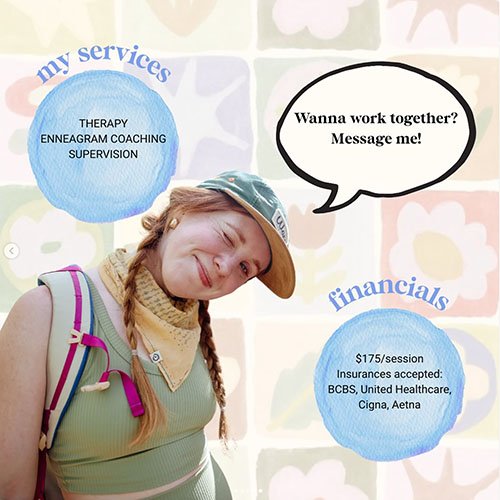
Human to the Fullest offers therapy in Houston and virtually across Texas for people who find themselves stuck in overthinking, rumination, perfectionism, or the constant pressure to figure everything out before they move.
If you don’t totally understand why your brain keeps doing this yet, that’s okay. We can get curious about it together.

Human to the Fullest is a Houston therapy practice for women who feel overextended, misaligned, or unsure of who they are.
Based in Houston. Virtual across Texas.