Feeling Stuck in Life When Nothing Is Actually Wrong
I think one of the strangest versions of feeling stuck is when, objectively, nothing is really wrong.
Your life might actually be good. You might like your job, or at least be really good at it. You may have relationships that make sense, responsibilities you’re handling, things you’ve worked very hard for. From the outside, there may not be an obvious problem to point to. And still, there’s this feeling that something is off.
Not necessarily wrong. Just off.
A lot of the time when someone comes to me with that feeling, my first thought is that their life may be right by the standards that were set for them. They followed the formula. They did the things they were supposed to do. They filled out the template correctly. The problem is that somewhere along the way, they may not have been listening very closely to what they actually wanted, cared about, or felt passionate about.
And that can be really confusing, because if you’ve done everything “right,” what exactly are you supposed to do with the feeling that you’re still not quite where you want to be?
When you did everything right and something still feels off
Feeling stuck does not always look like being unable to function. Honestly, a lot of the people I work with are functioning extremely well.
It can look like being in a job you’re very good at, but not feeling particularly fulfilled or energized by it anymore. It can look like being in a relationship that technically makes sense, but there’s something about it that doesn’t feel spot-on. It can look like realizing you don’t have much time for yourself, your friends, your hobbies, or your interests because everything you have is constantly being given away somewhere else.
Sometimes the things you genuinely want to give your energy to are also draining your energy instead of alchemizing it into something that feels fulfilling. That’s where this can get especially hard to name. You can care deeply about your work, your family, your relationships, your responsibilities, and still be tired by the way you’re living inside of them.
I think of some of this as a kind of micro burnout. It’s not necessarily, “I hate my life and everything has to change.” It’s more like, “I’m living my dream. I actually like my life. There’s just something about it that I can’t pinpoint.”
Maybe you’re tired all the time. You’re a little more irritable. You’re not very motivated even though you care about what you’re doing. You keep dismissing it with, “I’m just busy,” or, “I’m just tired,” because those explanations feel reasonable enough.
Feeling stuck can also look like knowing there’s a bigger leap or transition somewhere in front of you, but you can’t quite bring yourself to take it. So you do a whole lot of little things instead. You stay productive. You stay busy. You keep moving. But somehow all of that movement lets you avoid looking too closely at the bigger thing.
That doesn’t mean there is definitely some enormous life change you need to make. Sometimes people ask me how to tell whether they are actually stuck or whether they are simply in a hard season, and my immediate thought is, could it not be both?
There may be resistance. There may be friction. There may be actual roadblocks. Sometimes stuckness feels very indefinite, almost like you cannot imagine how you would maneuver your way out of it. A season can have plenty of friction too, but there may be some sense that it has a natural end.
And sometimes you genuinely do not know which one you’re in yet. That’s okay. The point is not to diagnose your own life perfectly. The point is to get curious enough to notice what is happening.
The invisible rules underneath your life
When I think about what keeps people stuck, I keep coming back to the things that are unconscious. We don’t know to challenge something if we don’t even realize it is a rule.
And “shoulds” are so good at hiding that way.
They come from culture, family, friends, whatever everyone around us is doing, the things we watched growing up, the timelines we absorbed without realizing we were absorbing them. By this age I should be in my career. By this age I should be married. By this age I should have children. Successful people do it this way. Good people do this.
Some of those rules are much smaller and much more ordinary, which I think is part of what makes them powerful. I should answer this text right away. I should check on everyone. I should do this the most efficient way. I should make sure nobody else is uncomfortable. I should be able to handle all of this.
A lot of our shoulds disguise themselves as efficiency, morality, responsibility, or the way we show up as our best selves. They don’t feel like arbitrary rules. They feel responsible. They feel correct. They feel like, “This is just how you do it.”
And at some point, those rules probably served a purpose. They may have helped you feel safe, successful, needed, accepted, or in control. The problem is that we can absorb them so completely that they become our reality rather than something we are actively choosing. Then one day you realize you are exhausted by a life you technically chose, and you don’t even know where the choice happened.
A good life can still stop feeling like your life
I was thinking about this recently because I can actually be pretty black-and-white myself. I can very easily believe there is a right way to do something, and obviously I know the right way. I have opinions. :)
But the flip side of that is important too. Just because something is not the way I would do it does not mean it is bad. And just because something is good does not mean it feels right for you. Just because your life looks good from the outside does not necessarily mean it feels like yours or that you have consciously chosen all of it.
Sometimes a life has been handed to us. Sometimes we have worked unbelievably hard for it, finally gotten everything we were aiming for, and then looked around and thought, “Wait. I feel like I just inherited something.”
That doesn’t mean the life itself is bad. There are a lot of good things. It just raises a different question: is it actually yours? Is it what you value? Is it important to you? Is it something you love? Or is it something that looks good, sounds good, probably is good, and still doesn’t quite feel like a natural expression of you anymore?
I think one of the hardest versions of this happens when the version of you who built your life is not really the version of you who is living in it now.
A lot of times, you start to dislike yourself before you start to dislike your life. There can be this resentment toward yourself because you think, “I chose this and I’m exhausted by it. I thought this was what I wanted. What is wrong with me? I should have known better. I should have paid more attention.” Then we start looking for the fix. What is the one thing I can change so that everything feels better again?
Except you are not supposed to like your life all the time. That isn’t really the standard. There are going to be things that are hard, boring, draining, inconvenient, or simply part of being a person. But when your life starts to feel like a chore or a responsibility all the time, that feeling has a way of spreading. That’s usually where I think it becomes worth paying attention rather than continuing to explain it away.
Getting unstuck can become another way to stay stuck
This is where high achievers can get themselves into a funny little predicament. We are very good at having somewhere to go. If I know where I’m headed, great. I can make the plan. I can figure out the steps. I can lay the track and start moving.
The problem is that when you realize your current life no longer fits in quite the same way, that same skill can turn getting unstuck into another achievement.
Now the task is to figure out the next thing. What career do I actually want? Where should I move? What relationship should I be in? What does the next five years need to look like? What is the correct new answer? It becomes, “Okay, let me just figure out what I’m supposed to want now.” And I think that can put us right back into the same trap.
Sometimes getting unstuck is not the same thing as knowing where you’re going. Sometimes getting out of your own head enough to imagine a different circumstance, to get curious, to be open, is already movement.
I think about open-ended play with little kids a lot here. As the parent, I could sit down with a toy and show a child how to use it correctly. Maybe I can even show them all of the different correct ways to use it. But where the magic happens is often when you hand them the thing and let them explore. They find their own way to play with it. They make something up. They discover something you would not have thought to teach them.
I think high achievers and perfectionists have a hard time giving themselves that same kind of freedom. We like the security of a path. We like knowing where the on-ramp is and where the road leads. We like A + B = C. Obviously, life has constraints. We need to make money. We have relationships and responsibilities. I’m not suggesting everyone abandon their jobs and wander around indefinitely until the universe speaks to them.
I just think there is more room for curiosity than we usually allow ourselves. You can know something is not fitting without immediately assigning yourself a new destination.
You don’t need to know what comes next before you admit this isn’t it
It is genuinely scary to say out loud that something is not working when you don’t have a solution for it. I think that reflex makes complete sense. We want hope. We want a next step. We want to know we are not about to dismantle something important for no reason.
But you do not need to know the perfect next thing before you are allowed to name what is happening now.
Sometimes the image is still blurry. Maybe you know you want something different in your career, but you have no idea what. Maybe there is a pull toward another city or another way of living, and you cannot explain it yet. Maybe something in a relationship, a role, or the way you structure your life feels different than it used to. You are allowed to notice that before you solve it.
In fact, I think setting the goal too early can sometimes become another form of performance. You name that something feels off and then immediately start trying to build your life around a new idea before you’ve really had time to explore it. That is how we end up asking again, “Okay, what am I supposed to want?” What if there is a little more room between those two things?
One thing I pay attention to with clients is the energy exchange. It can be hard to differentiate between something we genuinely want and something we have gotten really good at wanting, because both can come with moments of fulfillment. But underneath that, there is often information. Something you genuinely want can still be challenging because, obviously, it is still life. But it may feel like a more natural expression of your energy. It fuels something, energizes something, inspires something.
The things we have gotten good at wanting can feel more like performance or requirement. There may be this underlying anxiety to them, or a constant draining of energy even while you are succeeding. That isn’t a perfect test. I don’t think there is a perfect test. It is just something to get curious about.
Sometimes the actual change is surprisingly small. Maybe you do not quit the job. Maybe you do not leave the relationship. Maybe you do not move. Maybe you start noticing what is actually your life versus the life you feel like you’re supposed to want.
If right now 80% of your life feels inherited and 20% feels like yours, maybe the work is not immediately getting to 100%. Maybe over time it becomes 50/50. Then 75/25. Maybe there are micro changes. Maybe you change how much energy something gets from you, or the rules you have around it, or your relationship to it.
A lot of getting unstuck is building that consciousness and learning to ask yourself questions you may never have known to ask.
And this is also where I want to say something I hear people wonder about all the time: yes, this is a valid reason to go to therapy. I think it is actually an underrated, brave process to say, “I have worked really hard. I have sacrificed a lot for this life. And I kind of want to burn it all down.”
That does not mean we are going to burn it all down. It means there is something there worth listening to.
When someone sits across from me and says, “I don’t know what I want. I just know this isn’t it,” my reaction is genuinely, What a wonderful place to start. Because you have already noticed something.
From there, therapy can be a place to figure out whether you want to problem-solve, explore, or maybe do a little bit of both. We can look at what is actually not working, what you want to maintain, what parts of you are terrified of shaking the foundation, what parts are asking for something different, and what it might look like to put some action behind that when the time is right.
You do not have to come in with the answer. You don’t even have to know whether this is stuckness, a season, or some combination of the two.
You can start with, “Something feels off.” That is enough.
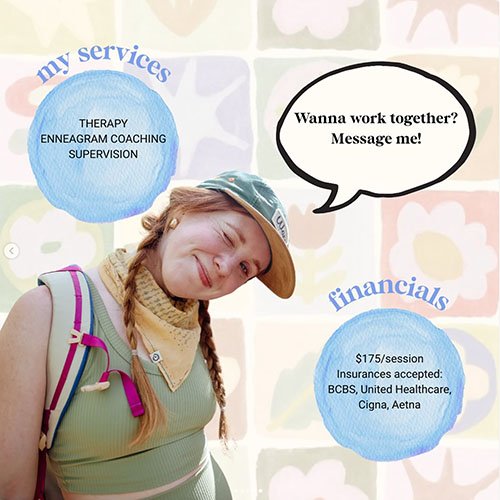
Human to the Fullest offers therapy in Houston and virtually across Texas for people who feel overextended, misaligned, stuck, or unsure of who they’re becoming. If this sounds familiar, you do not need to figure out the next step before reaching out. That’s kind of the point.

Human to the Fullest is a Houston therapy practice for women who feel overextended, misaligned, or unsure of who they are.
Based in Houston. Virtual across Texas.